Why Mainstream "Soothing" Creams Are Making Your Redness Worse (And the Dermatologist-Backed Protocol That Actually Stops It)

.svg)

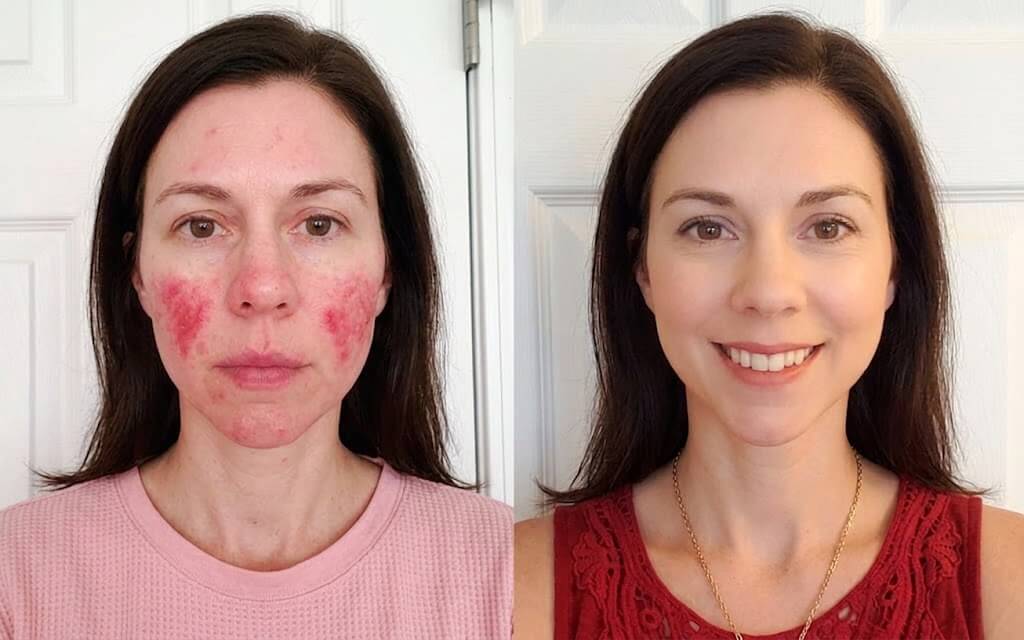
I need to tell you about the five years I wasted.
Five years of buying every "sensitive skin" cream on the shelf.
Five years of my face getting worse after every single one.
I want to explain what finally changed, because if your cheeks burn and flush the way mine did, you deserve to know what I wish someone had told me a long time ago.
The cycle was always the same.
Wake up.
Check the mirror.
See the redness creeping across my cheeks and nose like a sunburn that never fades.
Feel the heat radiating off my skin before I even touch it.
I would reach for the thick moisturizer that promised to "soothe and repair."
Within ten minutes, my face felt like it was on fire.
Then came the green color-correcting primer to hide the inflammation.
It just sat on top of the bumps, caked into every pore, making the texture more obvious under any light.
For years, I thought I was doing something wrong.
I cut out spicy food.
Gave up red wine.
Stayed out of the sun.
Switched products every three months.
Spent hundreds on serums that claimed to calm reactive skin.
Nothing worked.
The redness always came back, angrier than before.
My dermatologist kept telling me to "just moisturize" and "avoid triggers."
Helpful advice if you want to spend the rest of your life managing symptoms instead of solving the problem.
But here is the thing nobody tells you.
The creams are not just failing.
They are actively making it worse.
I will explain exactly why in a moment, because once you understand the mechanism, everything clicks into place.
The real reason your skin keeps flaring up
Here is what nobody told me for five years.
Rosacea is not a dryness issue.
It is not sensitive skin that needs a gentler cream.
It is a malfunction of the skin's own immune system.
And most products on the market do not even touch the mechanism driving it.
I had no idea about any of this until I read a research paper that changed everything for me. (More on that shortly.)
Beneath the surface, your skin has a defense system.
A receptor called TLR2 acts as an alarm.
In healthy skin, this alarm only goes off when there is a real threat, like an infection.
In rosacea, the alarm is stuck on maximum volume.
It fires constantly.
Heat, stress, wind, a sip of coffee.
Anything sets it off.
When TLR2 fires, it triggers an enzyme called KLK5.
This enzyme takes a normally helpful protein in your skin and cuts it into abnormal, inflammatory fragments.
These fragments cause the redness, the swelling, the visible blood vessels.
But here is the worst part.
Those inflammatory fragments loop back and trigger TLR2 again.
The alarm gets louder.
More KLK5 is produced.
More fragments are created.
A self-amplifying cycle that never stops on its own.
Now think about what happens when you apply a heavy, occlusive cream to this skin.
You trap heat.
Heat is a trigger.
The alarm fires harder.
The loop accelerates.
You are literally feeding the inflammation with the product you bought to calm it.
Your skin barrier is not just broken.
It is attacking itself.
And the creams you trust are making it worse.
So what actually breaks the cycle?
That is exactly what the research paper explained.
And it pointed to an ingredient I had never considered.
The turning point
I did not find this on Instagram.
I did not find it in a beauty magazine.
I found it in a clinical paper my dermatologist handed me after I broke down in his office for the third time.
He could see I was done.
Done with the trial and error.
Done with the burning.
Done with cancelling plans because my face was too red to leave the house.
The paper was about Azelaic Acid.
Now, I know what you are thinking.
An acid?
On skin that already feels like it is on fire?
That was my first reaction too.
Bear with me.
Azelaic Acid has been FDA-approved for rosacea since 2003.
Dermatologists have known about it for decades.
A 2023 systematic review of 43 randomized controlled trials confirmed it outperforms metronidazole, the standard prescription treatment, across every metric: redness reduction, inflammatory lesion count, and overall improvement.
Yet most women with rosacea have never heard of it.
The word "acid" scares people.
They hear it and think chemical peel.
They think burning.
They think irritation.
The reality is the opposite.
Azelaic Acid is one of the gentlest clinically proven actives in dermatology.
It is naturally occurring, found in wheat and barley, and even produced by healthy human skin.
It is safe during pregnancy.
No purging period.
No photosensitivity.
No peeling.
Here is why it works, and this is the part that made me sit up straight when I read it.
It does not mask redness on the surface.
It intervenes directly in the cascade I described above.
It inhibits TLR2.
The overactive alarm quiets down.
It suppresses KLK5.
The enzyme stops creating inflammatory fragments.
It neutralizes oxidative stress.
The damage to skin cells slows.
It breaks the self-amplifying loop.
The cycle that kept your skin in permanent crisis mode finally stops.
No other single ingredient addresses all of these pathways simultaneously.
I was ready to buy the first Azelaic Acid product I could find.
But my dermatologist stopped me.
He said most of them would disappoint me.
Here is why.
Why concentration and formulation matter more than you think
Not all Azelaic Acid is created equal.
And this is where most women get burned a second time.
Higher concentration does not mean better results.
Bioavailability matters more.
How much active ingredient actually reaches the target layers of your skin depends entirely on the formulation around it.
A well-designed cream at 10% can deliver more active to the right depth than a poorly formulated product at 20%.
Higher concentrations also come with a trade-off: burning, stinging, dryness, and scaling.
For skin that is already inflamed and sensitized, that is a dealbreaker.
You are adding fire to fire.
And then there is the texture problem.
Azelaic Acid has low water solubility and a crystalline structure.
Most high-concentration products leave a chalky white residue.
They pill under makeup.
People stop using them within a week.
And if you do not use it consistently, it does not work.
My dermatologist told me about a specific formulation that solved all of these problems at once.
A 10% concentration paired with an Anti-Inflammatory Botanical Complex: Yarrow, Calendula, Echinacea, and Palmarosa.
These are not filler ingredients.
Each one was selected to complement the Azelaic Acid mechanism.
Calendula inhibits nitric oxide production, a key inflammatory mediator in rosacea.
Yarrow promotes tissue regeneration.
Echinacea strengthens the skin's natural defenses against microbial triggers.
Palmarosa calms reactive skin and prevents bacterial flare-ups.
The result is a cream that absorbs cleanly.
No white cast.
No chalky feeling.
A texture you actually want to use every morning.
I was skeptical.
After five years of disappointment, you would be too.
But I tried it anyway.
Here is what happened.
What changed
The first thing I noticed was what did not happen.
No stinging.
No burning.
No redness flare after application.
For the first time, I put something on my face and my skin did not fight back.
Within the first week, the burning stopped entirely.
I could wash my face with warm water without wincing.
By week two, the bumps on my cheeks were visibly smaller.
The angry, inflamed patches started to flatten.
I kept checking the mirror, expecting it to reverse.
It did not.
By week four, I left the house without foundation for the first time in three years.
My skin was not perfect.
But it was calm.
Even.
The redness had faded to a level I had not seen since my twenties.
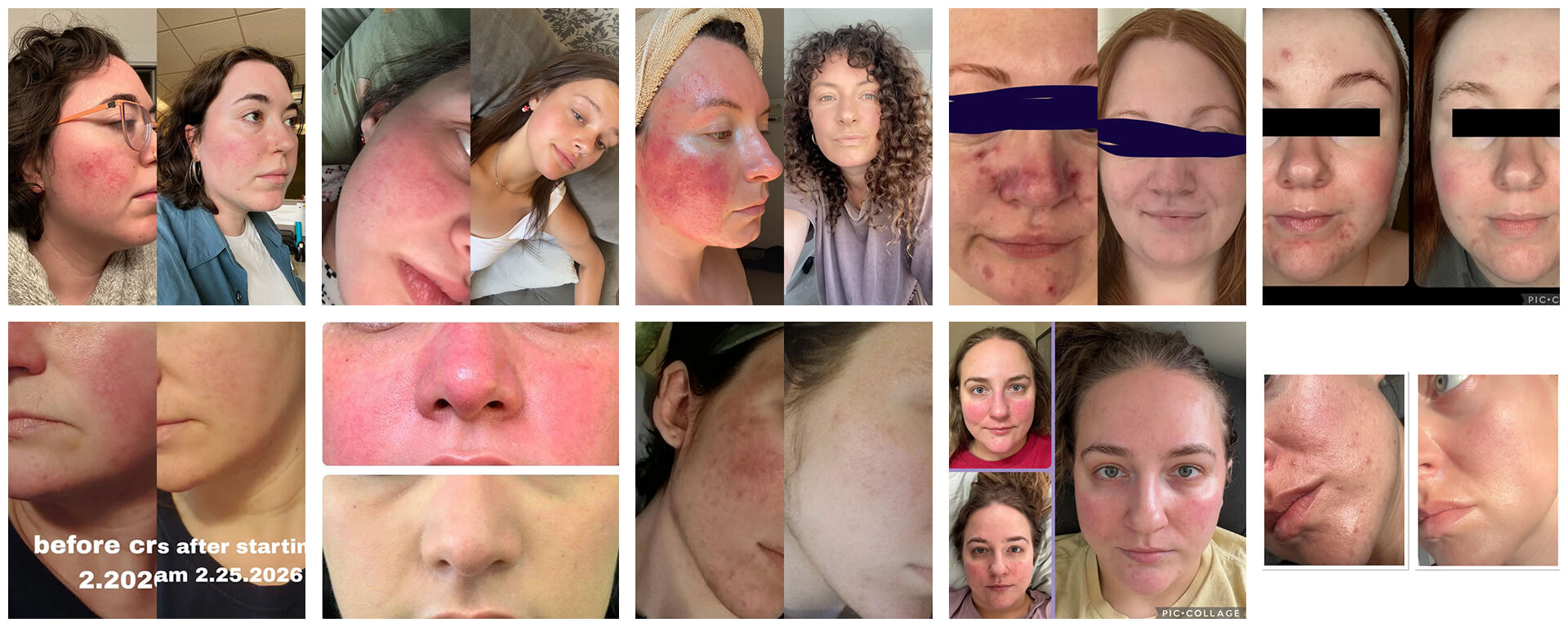
I am not the only one.
"Everything I tried before either stung or did nothing. This was the first product that actually felt like it was working with my skin, not against it. The bumps are gone. The redness is cut in half. I feel like I have my face back."
"I was so skeptical. I have been burned by so many 'miracle' creams. But my dermatologist recommended this specific formula, and within three weeks, my skin was calmer than it has been in years."
Thousands of women are now using this exact protocol.
Many of them, like me, had given up on finding anything that worked.
Where to find it
When I asked my dermatologist for the exact product name, he told me the optimized 10% formula was available to the public under the name Keeller.
It is not sold in pharmacies.
It is not a prescription.
It is a single cream that replaces your moisturizer.
One step, morning and evening, instead of the five-product routine that was making everything worse.
They offer a 60-day money-back guarantee.
If it does not work for your skin, you get a full refund.
To see if the 10% Azelaic Protocol is available for your skin type, check their official page below.
[Check Availability for Keeller]
.svg)
.png)
.png)
.png)
.png)
.png)
.png)
.png)